

Links
Next content
Read more
Algorithmic management in the workplace: existing regulations and their limitations
Algorithmic management in the workplace raises significant questions for the regulation of employment relationships. As automated systems increasingly monitor and govern workplace activities, concerns arise regarding transparency, accountability, the protection of workers’ rights, health...
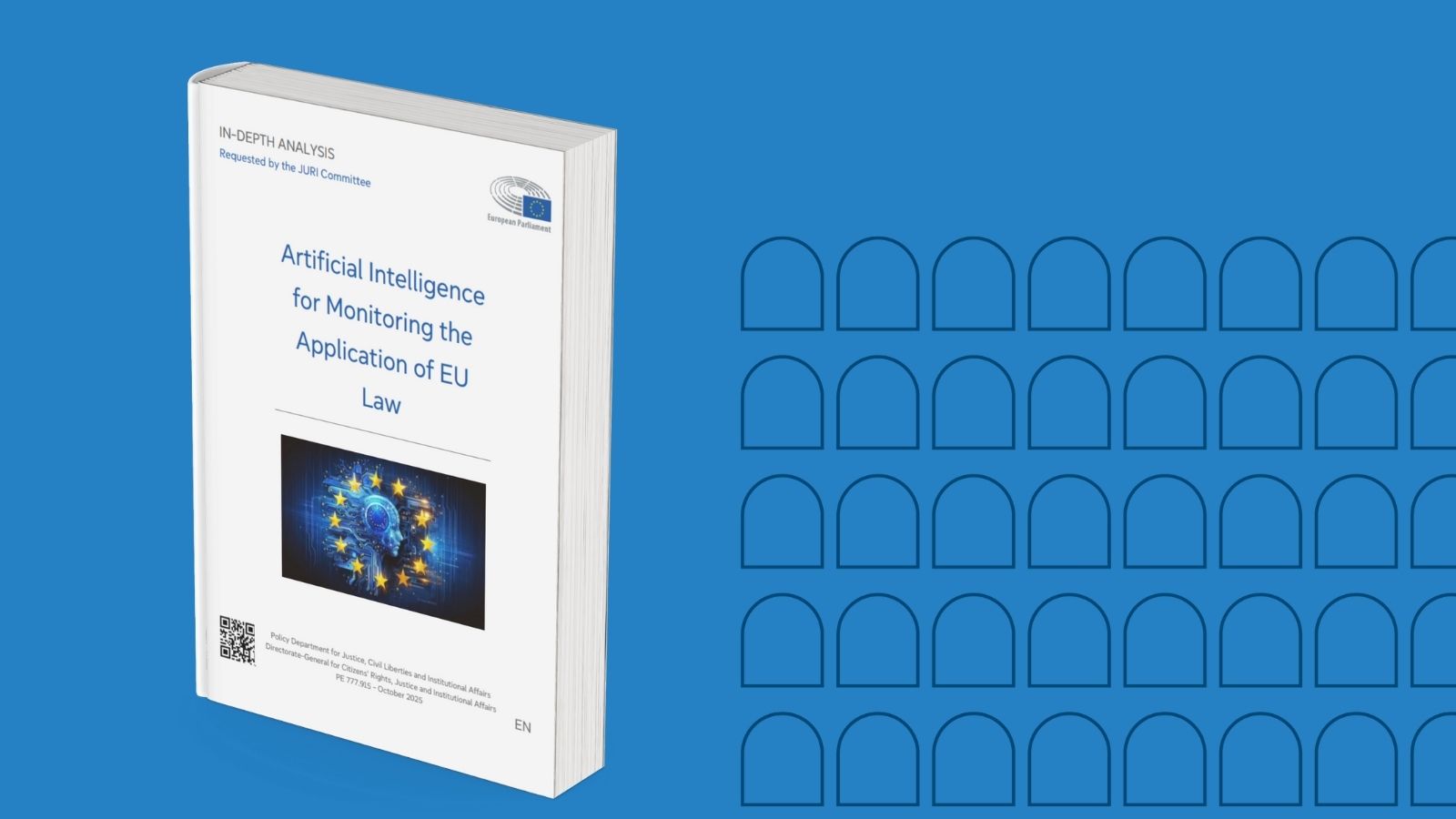
This report, commissioned by the European Parliament’s Policy Department for Justice, Civil Liberties and Institutional Affairs at the request of the JURI Committee, examines the use of AI techniques to support monitoring the application of EU Law.
First an overview is provided of the state-of-the-art AI solutions used in application of law. Then AI applications in the legislative process are considered, from pre-enactment information analysis, impact forecasting and public engagement, to drafting support and monitoring impacts and compliance. AI in monitoring the implementation of EU law is then analysed, considering both existing application and prospects for new AI technologies.
First the transposition of directives is considered. The application of binding provisions is then addressed, having regard to implementing rules, judicial decisions, administrative action, and social behaviour. Finally potential contributions of AI to a principled approach to EU law is examined, for consistent interpretation and the respect of fundamental rights and principles. Recommendations are finally proposed on using AI to make monitoring more accurate and efficient.
The present paper is based on two parallel developments. On the one hand as EU law grows in extent and complexity and governs more aspects of social life, there is an increasing need to effectively monitor its compliant implementation. On the other hand, the accelerated development of novel powerful AI applications opens promising and challenging opportunities to enhance compliance monitoring. Generative AI, thanks to its ability to produce and analyse natural language documents and extract information from them, can provide extensive support.